Boost Skills Fast with Interactive Online Coaching Classes
Trying to learn something new while balancing work, exams, or job hunting can feel impossible. I get it. I’ve taught people in classrooms and online, and one thing’s clear: the right online coaching class can shave months off your learning curve. This post walks through why interactive online learning works, how to pick the right program, and practical tips to get fast results from live online classes.
Why interactive online coaching beats passive courses
Not all online classes by distance education are created equally. Recorded videos may be helpful, but they often leave learners frustrated when they encounter a problem that is not explained in the videos. An interactive online coaching session solves this problem. During a live session, you receive instant feedback, real, time problem solving, and the opportunity to practice with the guidance of a coach.
I’ve noticed learners improve faster when sessions are hands-on. You try a technique, the coach points out small fixes, and you immediately apply them. That loop is where real skill development happens. If you want to move from "I kind of get it" to "I can do this confidently," interactive learning is the shortest route.
Core benefits of live online classes and virtual coaching
- Immediate feedback: You're not waiting days for answers. Coaches respond in real time, so you correct mistakes fast.
- Practical focus: Sessions center on doing, not just listening. That matters more for skill retention than passive study.
- Flexible access: Join from wherever you are. No commute, no stiff schedule, just the right tools and a good internet connection.
- Peer learning: Group classes create a learning community. Seeing others solve problems offers different angles you might not have considered.
- Accountability: Live sessions help you stay on track. It’s easier to skip a video than to miss a scheduled class.
If you’re preparing for exams, working to upskill, or job hunting, those benefits add up quickly. You get better preparation in less time and with less friction.
How interactive online learning actually works
Let’s break this down simply. A typical interactive online coaching session looks like this:
- Brief review of previous material to anchor learning.
- Short demonstration or explanation of a topic.
- Guided practice where students try a task and get feedback.
- Q and A and troubleshooting of common issues.
- Next steps and practice assignments to keep momentum.
That sequence keeps sessions focused and actionable. It mirrors how a good coach trains an athlete. Small, repeated improvements lead to bigger performance gains. In my experience, learners who follow the practice assignment between sessions retain more and perform better on tests and interviews.
Choosing the best online skill courses
Choosing the right program is the major decision at the beginning. An excessive number of options can be confusing. The following is the method I use with my students to decide, and you can use it as well.
- Match the course to your goal: Are you prepping for an exam, switching careers, or launching a side business? Different goals need different courses. Look for programs labeled as exam prep, career tracks, or practical skill courses.
- Check coach credentials: The experience of a coach really makes a difference. Try to find instructors who have been through it in the real world, not just those who have a stack of certificates. Practical know, how always wins against a pile of buzzwords.
- Prefer interactive formats: Consider the option of attending live online classes or booking a virtual session with a coach rather than going through a content, only recorded program. The interaction is what makes the difference.
- Read the syllabus carefully: Are there any hands, on projects, mock tests, or live problem solving mentioned in the syllabus? If the answer is no, then you should be careful.
- Look for trial sessions or demos: A brief demo gives you an opportunity to see if you like the coachs style and if the platforms tools suit you.Don’t skip this.
One gotcha: some programs call themselves "interactive" but only offer Q and A at the end of a prerecorded lecture. That’s not what you want. A real interactive online learning program will have live practice built into the session.
How to get the most from live online classes
Attending classes is one thing. Getting value from them is another. These are practical habits that change outcomes.
- Show up prepared: Read the brief, open the files, and have questions ready. Coming prepared turns passive listening into active learning.
- Do the homework within 24 hours: Your brain consolidates new skills quickly. I tell students to practice the coach’s assignment the same day or the day after. It matters.
- Use the chat and breakout rooms: Chat is not just for tracking links. Ask clarifying questions. Breakout rooms are where peer learning happens.
- Record with permission: If recordings are allowed, use them. But don’t rely solely on rewatching. Replay for revision, not as a substitute for active practice.
- Set small, measurable milestones: Instead of "learning Python, " set a target such as "writing a script that automates my data cleanup in one week."
Small wins keep motivation at a very high level. I have witnessed learners who have come to a complete stop due to the fact that their goals were too vague.
Technology checklist for smooth online training
Technical hiccups kill momentum. Here’s a simple checklist that avoids the usual problems.
- Stable internet connection, ideally wired for live sessions.
- Headset with a mic to reduce background noise.
- Dual monitors if you can. One screen for the coach, one for practice.
- Familiarize yourself with the platform features: screen share, chat, file upload, and whiteboard tools.
- Keep your browser updated, and close unnecessary tabs to avoid lag. Simple, but effective.
One quick tip: if you get disconnected, jump back in within a minute and message the host. Most coaches will recap the missed bit, so you don’t fall behind.
Designing practice tasks that actually build skills
Practice matters. Not all practice is equal. Deliberate practice focuses on one weakness at a time.
Here’s an easy formula to structure practice:
- Pick one small skill to improve.
- Get a short demo or model example from your coach.
- Try it for 15 to 30 minutes with no distractions.
- Ask for feedback or compare against the example.
- Repeat and increase complexity over time.
For example, if you’re learning public speaking, practice a 90 second intro focused only on voice and posture. Don’t try to fix content and delivery at once. That’s a common mistake. Nail the mic skills first, then add storytelling.
Common mistakes learners make and how to avoid them
We all make mistakes when learning. These are the ones I see most often and quick ways to avoid them.
- Skipping live sessions: People watch recordings instead. Live classes force interaction. Treat them like appointments you cannot miss.
- Overloading on content: Taking three advanced courses at once rarely works. Focus on one skill track and complete it before piling on more.
- Ignoring feedback: If a coach points out a small error, fix it immediately. Small corrections compound into big improvements.
- Not practicing between sessions: Live coaching is scaffolding, not magic. The real gains happen when you practice outside class.
- Choosing the wrong course format: Recorded-only courses are fine for knowledge, but not for applied skill building. Match format to outcome.
Fixing these mistakes is often the difference between finishing a course and actually changing your skill set.
How interactive online coaching supports exam prep and job-ready skills
If you’re preparing for an exam, like professional certification or college entrance tests, interactive coaching helps in two big ways. First, it targets weak topics with focused practice. Second, it simulates real test conditions through timed drills and mock exams.
For job-ready skills, live coaching combines technical tasks with practical application. Want to learn data analysis? A good program will have you work on a small dataset, write a script, and present findings, similar to how an adwords expert approaches data-driven campaign analysis—mirroring what employers expect.
Employers care about evidence. Projects, mock interviews, and live presentations give you that evidence. I tell students to turn their course projects into portfolio pieces. It’s a small step with big impact when you’re interviewing.
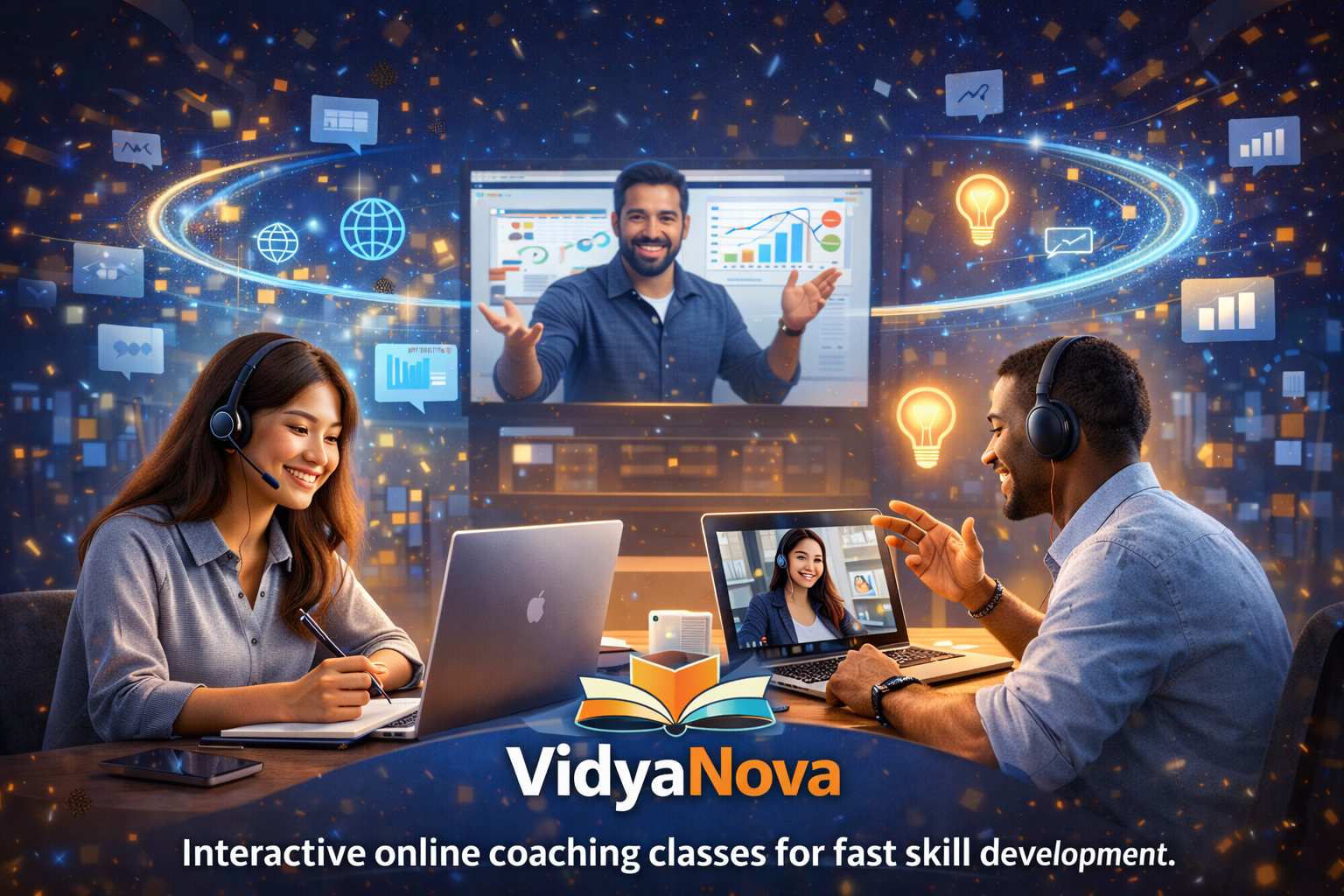
Measuring progress and ROI from online training programs
Progress matters. Without it, motivation drops. Measure learning in ways that show you’re getting closer to your goal.
- Skills checklist List what you should be able to do after each module. Tick items off as you achieve them.
- Practice logs Keep a short log of what you practiced and for how long. Ten minutes of focused practice beats an hour of distracted work.
- Mock assessments Regular tests show where you still need help. Treat them as learning tools, not judgment.
- Portfolio pieces: Save assignments that show your skill in practice. These serve as proof when applying for jobs or pitching clients.
Return on investment can be hard to quantify. Look at time saved, improved job prospects, and confidence gained. Those outcomes matter when you’re deciding whether a course was worth it.
Real examples that show interactive coaching works
Short story. A recent student I worked with wanted to switch into product management. They had little experience but enrolled in an online coaching program focused on product skills and interview prep.
We did weekly live sessions that mixed mock interviews, case drills, and practical tasks like writing MVP specs. After eight weeks the student could clearly explain tradeoffs, run a prioritization exercise, and ace the case interview. They landed an offer within two months.
Another example: a group of fresh graduates preparing for coding interviews. The live online classes simulated whiteboard problems and included real-time feedback. Progress was fast. Those mock sessions revealed common patterns that students could practice, so the real interviews felt familiar not scary.
These are simple, everyday wins. They show how professional online coaching and interactive online learning move the needle.
How to evaluate an online training program - a quick checklist
Before you commit, ask these questions. They’ll help you avoid a bad fit.
- Is the course live, recorded, or hybrid? Which format matches your goals?
- How much one-on-one time do you get with coaches?
- Are there practical projects or assessments built in?
- Can you see sample lesson plans or a demo session?
- What support exists between sessions, like forums or office hours?
- Does the platform have success stories or transparent outcomes?
If a provider can’t answer these clearly, be cautious. Transparency usually signals a program that cares about outcomes.
What good virtual coaching looks like
Here’s what I expect from high-quality virtual coaching:
- Clear learning objectives for each session.
- Hands-on tasks during class with immediate feedback.
- Short, focused practice assignments between sessions.
- Supportive community and office hours for follow-up questions.
- Progress tracking and measurable milestones.
When these elements are present, learners keep their engagement, and the skills become more lasting.
Tips for building a study routine that lasts
Routines are dull, but they are effective. If you desire lasting improvements, you have to have a routine that is compatible with your life.
- Block time on your calendar. Treat study as a meeting that you cannot skip.
- In the event that your schedule is tight, keep the sessions brief and concentrated. Two focused 25, minute blocks are better than one distracted 90, minute block.
- If mornings happen to be your peak energy times, then make sure to protect them.
- I’ve seen people double their progress by moving study to the morning.
- Use a simple tracker, like a checklist or a calendar app. Checkmarks are weirdly motivating.
Make the routine easy to maintain. The goal is consistency, not perfection.
Price and value: how to think about cost
Cost matters, but value matters more. Free resources exist, and many are useful. Still, paid interactive coaching often gives a better return because it speeds learning and gives you personalized guidance.
Consider these when weighing price:
- How fast do you need the skill? Faster learning often justifies the cost.
- Will the skill improve your earning potential or help you land a job?
- Does the program offer career services, like mock interviews or portfolio reviews?
- Is there a trial period or money back guarantee? That lowers risk.
Sometimes spending a little gets you past a blocker that would otherwise take months to solve on your own. I call that a smart investment.
Frequently asked questions
Are live online classes better than in-person coaching?
Not always. In-person can be great for some hands-on skills. But live online classes are incredibly convenient and increasingly powerful thanks to collaboration tools. For many learners, virtual coaching provides similar outcomes with less friction.
How do I stay motivated in an online course?
Set small goals, find study buddies, and measure progress. If motivation fades, revisit why you started and adjust your routine. Accountability from live sessions helps a lot.
Can interactive online learning work for technical and non-technical skills?
Yes, interactive online learning can help in both technical and non, technical skills. For example, coding, marketing, or public speaking skills are enhanced by live practice and receiving immediate feedback. These activities alone can improve skills much faster than just watching videos.
How long do I need to see results?
It depends on the skill. For tactical tasks like a coding challenge, you can see improvement in weeks. For deeper skills like management, expect months. The key is consistent, focused practice.
How vidyanova helps learners fast-track skills
Vidyanova is chiefly concerned with online interactive coaching that brings about tangible results. Our live online classes comprise an expert coach, practical assignments, and a community that encourages you. I have seen learners turning from shy beginners to becoming confident practitioners in as little as a few months.
We offer skill development courses and professional online coaching tracks tailored to the needs of students, working professionals, job seekers, entrepreneurs, and freelancers. If your goal is to acquire job, ready skills in a short time, our online training programs focus on practice, feedback, and measurable progress.
"The live sessions changed my approach. I stopped guessing and started doing. That made all the difference." - vidyanova learner
Quick checklist for enrolling in a course
- Know your outcome and timeframe.
- Try a demo or trial class.
- Confirm live coaching time slots match your availability.
- Check for practical projects and review policies.
- Ask about post-course support like mock interviews or coaching sessions.
Small wins: short practice examples you can try today
If you want to test interactive learning right now, try these small tasks. They fit into a lunch break and show how deliberate practice feels.
- Public speaking: Record a 90 second intro about yourself. Playback and fix one thing, like posture or voice volume.
- Coding: Solve one simple algorithm problem and annotate your thought process. Practice explaining it out loud.
- Marketing: Draft a one paragraph value proposition and get peer feedback from a friend or colleague.
- Interview skills: Do a 10 minute mock answer to "Tell me about a time you solved a problem." Keep it to 2 minutes.
These tiny practices add up. If you do them with a coach, you’ll get targeted fixes that speed progress.
Final thoughts
Interactive online coaching offers a faster, more practical path to skill development than passive courses. Live online classes give you feedback, practice, and accountability. They are flexible enough for busy schedules and powerful enough to produce real career outcomes.
If you’re serious about improving quickly, focus on programs that mix live coaching with deliberate practice. Be intentional about your study routine, measure progress, and pick a platform that supports practical projects and follow-up support.
Thinking about starting? Try a demo class. You’ll quickly see whether the coach’s style and the platform match how you learn.
Read More :
Discover Every Online Training Type to Upskill EffortlesslyHelpful Links & Next Steps
Book a meeting to talk with a coach and see which online skill courses fit your goals.