
The Hidden Disadvantages of Online Education That Most Learners Overlook
During the past 10 years, online learning has been the talk of the town. It was said to be the great solution to providing access to all, and that schedules would be more flexible, and the costs would be lower. From my point of view, these advantages do exist, however, along with them there are some disadvantages which are almost always forgotten and which can stop the progress of learning if you don't make the right plan. If you are a student, a working professional trying to improve your skills during the nights and weekends, a parent deciding on the best schooling option, an educator creating courses, or a researcher studying remote education, it still makes sense to take a break and realize that there is a lot more beneath the surface shimmering.
This post walks through the less obvious online learning drawbacks and virtual learning issues I’ve seen again and again. I’ll explain why they matter, point out common mistakes, and give practical fixes you can use right away. If you want smarter, more flexible learning options, keep an eye out for solutions, including what platforms like VidyaNova are trying to solve.
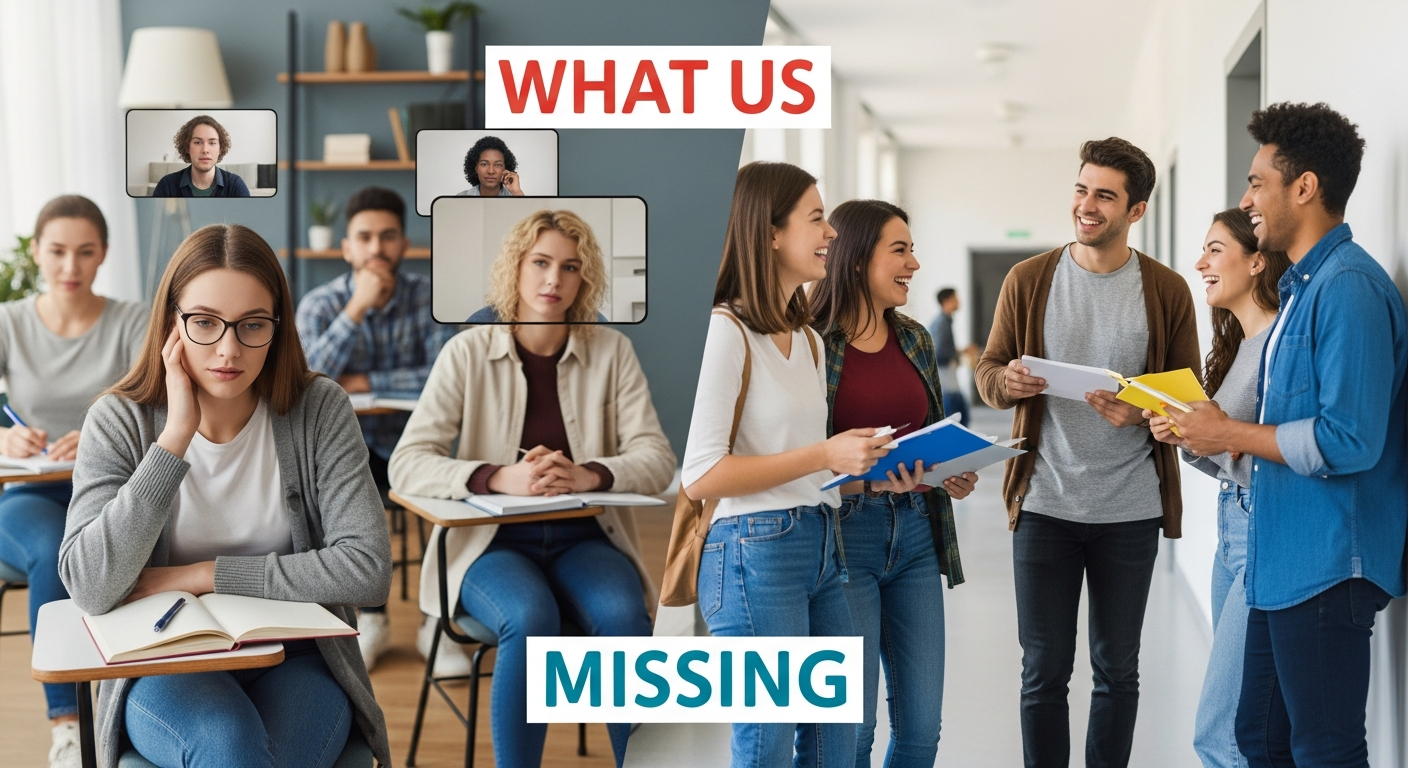
1. The Social Deficit: Learning Is Social, Even Online
Typically, folks consider that education is mainly a matter of content. It is somewhat true, but still, the statement is incomplete. The actual learning takes place mostly at the edges: it could be a moment before the class, after the lab, or during a coffee break. These small interactions foster professional networks, develop problem, solving skills, and boost self, confidence. Thus, when the whole thing is done online, such interactions become limited.
I’ve noticed that learners new to online study underestimate the loss of informal contact. They treat forums and scheduled group tasks as functional checkboxes, not opportunities to build relationships. The result? Less peer learning and weaker soft skills, notably communication, teamwork, and conflict resolution.
- Group work often becomes a set of uploaded files rather than a collaborative process.
- What could have been longer mentoring time has been reduced to quick checks of 10 minutes via Zoom.
- The hallway conversations which were networking opportunities resulting in internships or job referrals have disappeared.
2. Motivation, Procrastination, and Self-Discipline
Let’s be blunt: most of us do better with external structure. Class times, commute routines, and a designated study space are scaffolds that help behavior become habit. In virtual learning, those scaffolds are gone. Suddenly, everything rests on self-regulation and that’s where many learners struggle.
Procrastination shows up as missed deadlines, binge-cramming, and surface-level engagement. I’ve coached learners who thought “flexible” meant “do it whenever,” and then burned out when multiple courses suddenly peaked at once. That’s one of the classic remote education problems.
Common mistakes include:
- Not setting aside time in one's calendar for learning. "I will do it later" hardly ever turns into "I will do it now."
- Not recognizing the mental heaviness of balancing work, family, and studies at the same time.
- Not producing a special place for learning (even a small table can be of great help).
3. Feedback Loop Breakdowns
Feedback is the metal in the learning engine. It tells you what’s working and what’s not. Online courses often promise “instant feedback” via quizzes and automated grading. That’s useful, but not sufficient.
Automated feedback is great for facts and procedures. It fails when learners need qualitative input: drafts, design work, code architecture, lab technique. In many programs, you’ll wait days or weeks for meaningful instructor comments. By then, misconceptions are entrenched.
In my experience, the most successful online courses combine quick auto-grading with scheduled, personalized feedback sessions. If you’re a course designer, don’t rely solely on machine scoring.
4. Practical Skills, Labs, and Hands-On Training
Not every subject translates cleanly to a video and a quiz. Medicine, engineering, performing arts, laboratory sciences, these fields depend on tactile practice, real-time troubleshooting, and equipment access. Virtual simulations have come far, but they’re not a full replacement yet.
Students often assume a well-designed simulation will teach them the same as a lab rotation. It doesn’t. You don’t just learn procedures; you learn to sense failure modes, to improvise, and to manage tools, skills that require hands-on context.
Solutions include hybrid models, regional lab partnerships, and intensive in-person bootcamps. I’ve seen programs that pair remote theory with short, concentrated on-site sessions and those tend to produce better outcomes than purely virtual tracks.
5. Assessment Integrity and Credential Trust
Cheating and concerns about test security have been the main topics of news repeatedly. Proctoring solutions claim to fix problems by using webcams and AI, but these create new problems: privacy, bias, and false positives. Besides cheating, employers and credential evaluators sometimes do not trust online certificates only.
That mistrust is not always quite understandable, but it is there. A resume filled with unknown online certificates can cause the employer to be skeptical unless the certificate is from a good provider or it contains the projects and assessments that can be verified.
Tip: selecting programs that require final exams under supervision, portfolio projects, or industry, supported assessments is the right decision. Employers take to GitHub repos, case studies, internships, and other demonstrable work much more than a mere list of course badges.
6. The Digital Divide: Not Everyone Has a Level Playing Field
“Online” doesn’t mean “accessible to everyone.” Internet speed, device quality, quiet study spaces, and digital literacy vary widely. Remote education problems are often socioeconomic problems in disguise.
I’ve worked with learners who had these realities: spotty Wi‑Fi, outdated laptops, or a noisy household. They’re not lazy. They’re disadvantaged. Even small tech glitches, a slow device, an incompatible browser, can create big learning gaps over a semester.
Actionable steps: platforms should provide low-bandwidth alternatives (transcripts, audio-only lectures), mobile-first design, and offline resources. Educators should avoid scheduling important live events without offering recorded options or asynchronous alternatives.
7. Cognitive Overload and Attention Fragmentation
Screens are distracting. Notifications, email, Slack messages, and tab switching fragment attention. Online course content that’s dense, long, or poorly signposted forces learners to multitask and multitasking wrecks learning.
I recommend chunking content into 6–12 minute videos, adding clear signposts, and using retrieval practice (short, frequent quizzes) to pull attention back to the material. Many courses still lean heavily on hour-long recorded lectures. That’s a design choice that reduces retention.
8. Platform and Technical Friction
Even a great course fails if the platform is clunky. UX matters: confusing navigation, login failures, inconsistent file formats, and broken links all add cognitive overhead. Each obstacle nudges a learner closer to dropping out.
Technical friction also shows up in assessment tools, group collaboration software, and compatibility across devices. I’ve seen students spend hours trying to upload a project because the platform accepts only one file format or caps file size at an impractical limit.
When researching a platform, test it first. Look for clean course architecture, reliable mobile access, and clear tech support channels. And yes, that support needs to be human, not just a chatbot.
9. Instructor Readiness and Poor Course Design
Great content does not equal great teaching. Many instructors were trained for in-person classrooms and don’t naturally translate their methods to remote formats. The result: dense slide decks, extended monologues, and heavy reading loads without interaction.
I've seen courses that simply upload lecture videos and call it a day. That’s a missed opportunity. Effective online teaching leverages frequent formative assessments, interactive elements, and asynchronous community spaces that encourage reflection.
Tip for educators: invest in instructional design. Even small course redesigns, adding discussion prompts, low-stakes quizzes, and peer review, greatly improve learner outcomes.
10. The Illusion of Flexibility and the Work-Life Blur
Flexibility is a double-edged sword. On one hand, online learning lets people study around jobs and family obligations. On the other, it erodes boundaries. I’ve watched professionals respond to 2 a.m. emails because a course forum never sleeps.
This always-on culture creates chronic stress. It’s easy to convince yourself that “just one more module” is fine, until you’re exhausted and learning stops being effective.
Set clear boundaries. Schedule learning blocks and protect them as you would a meeting. If you’re an instructor, avoid perpetual “optional” assignments that quietly become expectations.
11. Scalability vs Personalization Trade-offs
Online education scales beautifully. One lecture can reach thousands. But scale often sacrifices personalization. Massive courses (MOOCs) are efficient, yet they struggle with retention and completion rates because learners don’t get tailored support.
Personalization requires data, intervention strategies, and human attention, all of which cost money. Platforms promising hundreds of courses for cheap can’t realistically give high-touch coaching. That mismatch creates a gap between learner expectations and actual outcomes.
Best practice: look for blended models, scalable content with targeted mentoring, peer tutors, or small cohort interactions that preserve personalization at scale.
12. Costs and Hidden Expenses
Online courses are not always less expensive than traditional ones. Sometimes students are not aware of the additional costs that are included in these kinds of courses such as proctoring fees, software licenses that are mandatory, and costly textbooks (even if they are digital), and also, the expenses of the house that increase due to studying at home. Moreover, Time is also very valuable, a longer learning period in order to make up for a shallow instruction, or additional hours spent fixing the technical problems.
It is advisable to keep away from pricing schemes that hide the essential fees in the small print. If a program is very cheap, find out what is included: mentorship, assessment, and career support are usually the main differences between obtaining a certificate and making a career pivot..
13. Community, Networking, and Career Outcomes
It is a common fact that employers bring people on board, not certificates. They highly rate references, portfolios, and demonstrated problem, solving skills. Fully online programs may sometimes be devoid of a credible networking structure, no career fairs, no alumni referrals, no casual talks with industry guests.
As far as I am concerned, graduates of programs that have employer partnerships and project, based assessments are able to find better jobs than those who only have credentials. In case you want to change your career, it would be better to first consider programs that offer real, world projects and networking opportunities.
14. Mental Health, Burnout, and Loneliness
The combination of isolation, unclear boundaries, and increased cognitive load is quite overwhelming. Students frequently overlook mental health issues until their academic performance deteriorates or anxiety rapidly increases. While conventional campuses offer counselors and a sense of community, students studying online have to source support outside, which is not always possible.
Typical mistakes are neglecting sleep quality, telling oneself "I will catch up later, " and believing that others are not going through the same struggles. None of these actions contribute to the solution. Institutions that incorporate mental health as a part of their programs, have peer support groups, or at least provide directions to the services, experience higher retention and students' satisfaction.
15. Data Privacy, Surveillance, and Ethics
Often, a remotely proctoring program requires access to a user's camera, monitoring of the screen, as well as other intrusive permissions. This, in turn, elevates privacy and fairness concerns to a level of being quite significant. There have been occurrences when certain systems have reacted more heavily to the behaviors of specific demographic groups, thereby causing bias and resulting in false accusations of cheating.
Usually, one of the most important aspects is still consent and transparency. Providers, please inform us: what information do you gather, how long do you store it, and who is allowed to see it? Take the ones which are equipped with the least surveillance and take the most human, centered approach as the method for integrity.
Read More:
Platforms for Online Teaching: The Surprising Options Educators Often Miss
The Benefits of AI in Improving Student Engagement and Curiosity
Practical Steps to Mitigate These Problems
Here are concrete strategies I recommend for different stakeholders. I’ve used many of these myself and seen them work in diverse contexts.
For Learners
- Set a fixed study schedule and protect it. Treat it like an appointment.
- Create a defined study space, even if it’s a corner of a room.
- Use accountability: study groups, mentors, or paid tutors keep you honest.
- Prioritize courses with project-based assessments, not just quizzes.
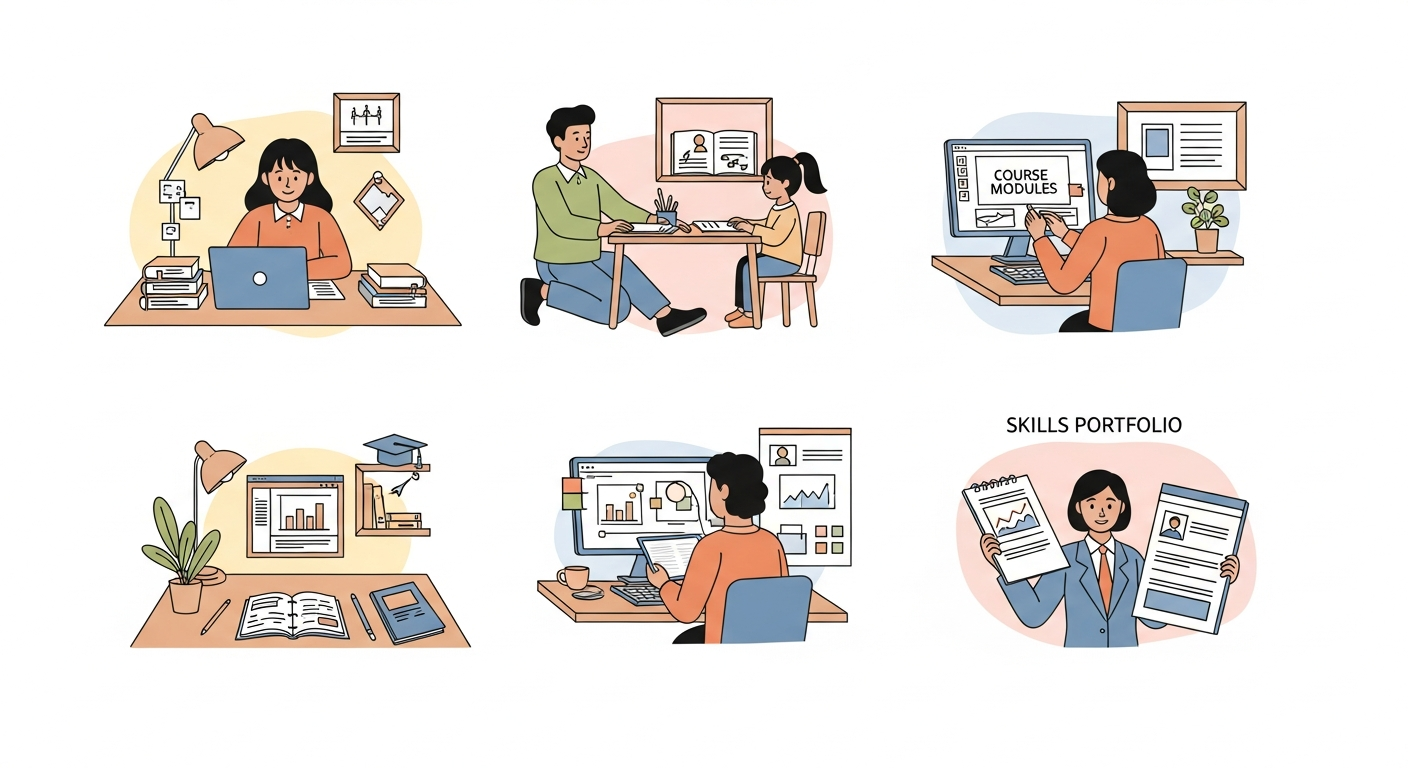
- Build a portfolio of work that demonstrates applied skills.
- Check technical requirements before enrolling; ensure you have reliable hardware and bandwidth.
For Parents
- Recognize the hidden costs: emotional load, supervision needs, and tech barriers.
- Help young learners set routines and a distraction-free space.
- Watch for signs of isolation or declining mental health.
For Educators and Course Designers
- Invest time in instructional design, chunk content and add retrieval practice.
- Design regular, personalized feedback cycles and peer review.
- Offer low-bandwidth and offline options for essential resources.
- Create live and asynchronous community spaces for informal interaction.
For Employers and Program Managers
- Acknowledge that learning on the job requires time; offer dedicated learning hours.
- Partner with programs that include project assessments and mentoring.
- Evaluate candidates on demonstrable skills, not just certificates.
Red Flags When Choosing an Online Course or Platform
Watch for these warning signs, they usually indicate poor outcomes down the road.
- No clear statement on instructor availability or feedback turnaround times.
- All content is long, unbroken lectures with no active learning elements.
- Platform requires invasive proctoring with unclear data policies.
- Pricing is opaque; mandatory fees aren’t disclosed up front.
- No community or networking features beyond a static forum.
- Certificates are generic and not tied to real-world assessments or employers.
Case Study: When an Excellent Course Still Fails
Let me share a short example from a project I helped with. A reputable university launched an online professional certificate. The syllabus was excellent. The videos were top‑notch. Yet completion rates were abysmal.
Why? They didn’t account for learner context. Most enrollees were working professionals juggling overtime and families. The course presumed multiple-hour weekly blocks, offering little flexibility and no cohort-based support. Students fell behind, felt guilty, and dropped out.
After revising the program to include shorter modules, peer cohorts, and scheduled mentor check-ins, completion rates improved dramatically. The lesson: great content alone isn’t enough. Design for real human schedules and constraints.
How VidyaNova Fits In
Platforms can make a real difference when they tackle these hidden disadvantages head-on. That’s the approach I’ve seen at VidyaNova, balancing flexible learning with structured support, real-world projects, and cohort-based mentoring. They don’t just host courses; they try to design experiences that account for attention limits, the need for feedback, and the value of networking.
If you’re exploring online study options, look for providers that emphasize mentorship, project-based assessment, and career alignment. Try a short pilot course before committing, and always check for community and support features.
Quick Checklist Before You Enroll
- Does the program include project-based assessments and feedback? (Not just quizzes.)
- Are instructor availability and turnaround times clearly stated?
- Is the platform usable on mobile and low bandwidth?
- Does it offer community features or cohort interaction?
- Are data privacy and proctoring policies transparent?
- What are the total costs (software, proctoring, subscriptions)?
- Can you preview the course UX before paying?
Final Thoughts
Online education has transformed access to learning. It’s flexible, scalable, and often more affordable than traditional paths. But it’s not magic. The cons of online education are real: social loss, motivation challenges, feedback gaps, accessibility barriers, and ethical concerns around surveillance and data. These are not theoretical; they affect outcomes.
If you’re entering the online learning world, do it deliberately. Expect to build systems around your learning: blocks of time, accountability partners, a portfolio approach, and realistic expectations about hands-on skills. If you’re designing or running programs, invest in instructional design, low-bandwidth access, and community-building and measure outcomes beyond completion rates.
I’ve found that the programs that succeed are the ones that treat online learning as social, structured, and human-centered. If you’d like to explore smarter and more flexible learning options, platforms like VidyaNova are building toward those principles, blending flexibility with mentorship and real-world projects so you don’t have to go it alone.
Helpful Links & Next Steps
- VidyaNova - Smarter, more flexible learning
- VidyaNova Blog - Articles on learning design and remote education
Explore smarter and more flexible learning options with VidyaNova