
The Hidden Benefits of E-Learning You Didn’t Know About
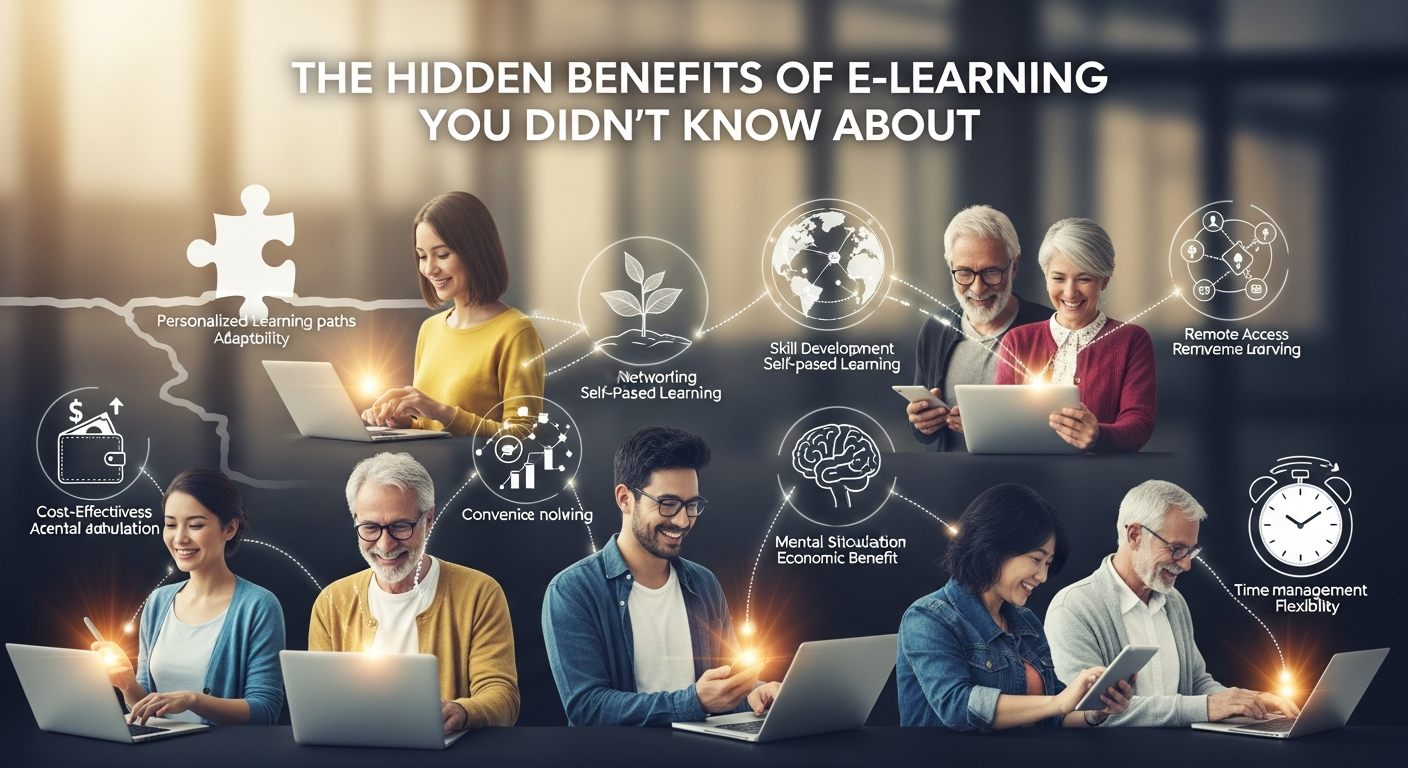
People think e-learning is just recorded lectures and quiz scores. They picture someone watching videos in their pajamas. That is part of it, sure. But e-learning has a lot of lesser-known advantages that make it a powerful tool for students, working professionals, educators, and corporate trainers.
I've been involved with digital education for years, coaching teams and helping organizations pick the right e-learning platforms. Along the way I noticed patterns. Some benefits keep getting overlooked even by experienced people. This post pulls those into the light. If you're curious about online courses, virtual learning, or building a blended program, you'll find practical ideas and common pitfalls here.
First, a quick reality check
The benefits of online courses are not limited to just being easy or comfortable. Indeed, we could say that flexible learning allows you to study at any time that suits your schedule. Also, self-paced learning gives you the opportunity to make progress at a faster or slower rate. However, the main benefits stem from the fact that different digital formats fundamentally change the way people learn.
It is better to consider e-learning as a set of tools rather than just one tool. When you have microlearning, interactive assessments, data-driven feedback, social features, and well-designed instructional materials, then you have something that can outperform face-to-face training in many cases.
1. You learn on your own schedule and actually keep more of it
Flexible learning is the headline benefit. But the hidden twist is how it improves retention. When learners control time and place, they study when they are mentally ready. That sounds small. It is not.
In my experience, self-paced learning reduces stress and increases focus. A tired person trying to multitask through a live lecture remembers less. Give that same person a short module to do in a calm moment, and retention jumps noticeably.
Try this simple practice: break a topic into three 10-minute chunks instead of a one-hour dump. People finish short chunks more often. Completion begets confidence. Confidence improves follow-through.
2. Microlearning and chunking make skills stick
Long lectures feel efficient. They are not. Human attention drops quickly. Microlearning solves that.
Short modules make it easy to revisit ideas, practice a single technique, and apply it immediately. For example, show two minutes of a coding technique, then give a five-minute interactive exercise. That tiny loop of watch-try-repeat is powerful.
I've built courses where designers and developers get one micro-module per day. After three weeks the cohort reports they remember and use more skills than peers who sat through a weekend workshop.
3. You get real-time data that actually helps learners
Online learning platforms collect data. That can sound creepy. But data, used properly, makes training smarter. You can see where learners pause videos, which quiz questions cause trouble, and who drops off mid-course.
That information drives quick improvements. If a group struggles at a specific concept, split that lesson into parts or add a practical example. If many people skip readings, switch to an interactive activity.
As a trainer, having these signals saved my team hours. Instead of guessing why people were failing, we fixed the problem in a few days.
4. E-learning expands access and equity
Digital courses break time and location limits, a strategy every digital marketing company adopts. A student living in a remote village will have the opportunity to study the same subject as a student living in a big city. Parents who are working can access the class after they have put their children to bed. It is this access which has become very important.
Access means also accommodations. Proper online learning platforms offer support for captions, transcripts, adjustable playback speeds, and screen reader compatibility. All these features make the courses accessible to learners with disabilities and different learning preferences.
It's a small detail but still very important: when you are designing courses, make sure you use clear headings, short paragraphs, and simple navigation. By taking those steps the content becomes more accessible to everyone.
5. It’s cost-effective and scalable
Cost-effective education is a huge motivator for organizations. Running a live class costs venue, travel, food, and time. Online courses can be reused and scaled quickly.
That said, quality does not happen for free. Creating good content takes time and expertise. The hidden benefit is that once you invest in good material, you can deliver it to thousands with marginal cost per learner shrinking rapidly.
Companies I have worked with often start with a pilot cohort and reuse those materials company-wide. The return on investment shows up fast, especially for compliance training and onboarding, where the content repeats.
6. Skill development online can be more measurable
When I teach problem solving or sales skills, I want to know if learners actually improved. E-learning platforms let you tie learning to measurable activities. You can track completion, assessment scores, simulation results, and even on-the-job metrics.
For example, a sales team using scenario-based simulations can improve closing rates in a few months. You can measure behavior change, not just test scores. That makes training accountable and useful.
7. Faster updates keep content relevant
Courses need updates. In a live program, updating slides and schedules is painful. Online content is easier to change. Found a better case study? Swap it in. Regulations changed? Update the module and everyone sees the new version.
Keeping content current improves credibility. Learners notice when examples are outdated. Fresh content also helps with learner engagement. I always recommend a quarterly review cadence for core courses.
8. Blended learning becomes practical
One of the top secret advantages online learning is how effectively it goes along with in-person sessions. A class can be flipped in such a way that the time spent face-to-face is used for practice, coaching, and discussion rather than listening to a lecture.
I employ a straightforward blended approach as follows: 1) giving a 20-minute micro-module on the concept, 2) assigning a 15-minute practical task to be done before the workshop, 3) using the in-person time for role play or peer feedback. Students arrive prepared, and the face-to-face time achieves a greater level of worth.
9. Community and social learning drive motivation
Online courses can feel lonely if you do them solo. But the social features of modern platforms change that. Discussion boards, live Q and A sessions, peer reviews, and cohort-based timelines create momentum.
I’ve seen cohorts where peer pressure is positive. Learners post short wins, ask quick questions, and share resources. That sense of community often trumps gamified points and badges for keeping people engaged.
10. It builds transferable digital skills
Sometimes when we teach a subject, we also inadvertently teach learners how to learn online.
It is very important to note that skills such as navigating an LMS, contributing to forums, creating a short video response, and managing deadlines in a remote environment are highly marketable skills.
These digital habits become the skills of better remote work, better collaboration, and more confidence in virtual meetings. It may not be the main point, but it is very important when teams are shifting to hybrid or fully remote work.
11. Environmental and time savings add up
Remote education cuts commuting and travel. That saves time and reduces carbon emissions. For organizations running repeated training, the environmental impact is real.
On the individual level, those time savings matter too. An employee who avoids a two-hour commute can spend that time practicing a skill or decompressing. Both are valuable for learning and retention.
Common mistakes people make with e-learning
Now for the blunt part. E-learning is not magic. I have seen a few recurring mistakes that kill outcomes.
Overload of content. Long modules and dense slides lead to drop off. Break things into bite sized pieces.Too much passive video. Listening is not learning. Add interactions and quick checks for understanding.
No measurement beyond completion. Completion rates do not show behavior change. Connect training to real metrics.
Poor platform choice. A clunky user experience kills motivation. Test platforms with real users.
No instructor presence. Even a short welcome video from an instructor boosts engagement.
Ignoring accessibility. No captions, poor contrast, and tiny fonts shut people out. Fix those early.
Each of those is fixable. Start small and iterate. Simple improvements often have the biggest impact.
Practical steps to tap these hidden benefits
Ready to get started? Here are a few practical steps you can use right away.
- Start with a pilot. Pick one course or one team. Test micro-modules and track engagement. You will learn fast and fail cheap.
- Design for short attention spans. Aim for modules under 15 minutes. Use a single learning objective per module.
- Add interactions. Use quizzes, drag-and-drop activities, short simulations, and reflection prompts.
- Use data wisely. Monitor engagement at the lesson level. Look for patterns and act on them.
- Blend when possible. Use online time for knowledge transfer and live time for practice and coaching.
- Create a community. Encourage learners to share wins and obstacles. Peer feedback is gold.
- Iterate quarterly. Review content for relevance and update examples and case studies.
These steps are practical and low friction. They keep you from overbuilding and allow you to focus on what moves the needle.
Simple examples you can try tomorrow
Here are small, human examples to show how this looks in real life.
- Student studying statistics. Replace one two-hour lecture with six 15-minute micro-modules and weekly problem sets. Add a discussion thread where students post one puzzling result each week. Results: better long term retention and less last-minute cramming.
- Sales rep onboarding. Use three scenario-based modules with short simulations. Follow them with a live coaching session focused on role plays. Results: faster ramp up and higher confidence on calls.
- HR compliance training. Break a one-hour course into five micro-lessons. Add quick quizzes and a short certificate. Results: higher completion and less time away from work.
These are small changes you can make without a giant budget. They illustrate the shift from content delivery to behavior change.
Read more :AI in E-Learning Portals: The Future of Personalized Learning Paths
How to choose the right e-learning platform
Picking a platform can feel like picking a new phone. There are many shiny options. Here are the features I look for and why.
- User friendly interface. If learners struggle to find content, engagement drops quickly.
- Good analytics. Click patterns, time on lesson, and quiz performance give you signals to act on.
- Mobile compatibility. Not everyone learns on a laptop. Mobile support expands access.
- Support for multimedia and interactions. You want to mix video, quizzes, and simulations easily.
- Accessibility features. Captions, transcripts, and keyboard navigation matter.
- Integration capabilities. Connect to your HRIS, LMS, or single sign on to reduce friction.
When I advise organizations, I always recommend running a short sandbox test with real users. Watch them navigate and ask where they get stuck. That reveals more than feature lists.
When not to choose pure e-learning
There are times when e-learning is not enough. High stakes, hands-on skills may still need in-person practice. For example, surgical skills, complex lab techniques, and some leadership simulations benefit from face-to-face coaching.
That does not mean no e-learning. Use online modules for theory, preparation, and follow-up. Then use targeted in-person time for deliberate practice. Blending beats either-or thinking in most cases.
Measuring success: what really matters
Metrics often confuse people. Completion rate feels good. Test scores look official. But the real measure is behavior and impact.
Ask these questions when you measure success:
- Did learners apply the skill on the job?
- Did the organization see a measurable business outcome tied to the training?
- Did learners return for more learning, or did they drop off?
- How did learners rate the usability and relevance of the course?
Use a mix of quantitative measures - retention, engagement, on-the-job metrics - and qualitative signals - learner feedback, manager observations. Both matter.
Common small mistakes and quick fixes
To wrap up practical help, here are quick fixes for frequent mistakes I see.
Mistake: Course is too long. Fix: Split into micro-modules with one learning objective each.Mistake: Video without interaction. Fix: Add two quizzes or a short simulation in the middle.
Why Agami technologies cares about this
At Agami technologies we help teams design and run courses that focus on skills and impact, not just content delivery. We partner with clients to pick the right e-learning platforms, design micro-modules, and set up measurement so you can see real results.
If you want practical help building a pilot or improving an existing program, we have experience with student learning, corporate training, and lifelong learning initiatives. We prefer simple experiments that give real feedback quickly.
Parting thoughts
Online learning advantages are deeper than convenience. When done right, digital education changes how people learn. You get better retention, broader access, measurable skill development online, and a scalable model that saves time and money.
Sometimes when we teach a subject, we also inadvertently teach learners how to learn online.
It is very important to note that skills such as navigating an LMS, contributing to forums, creating a short video response, and managing deadlines in a remote environment are highly marketable skills. These digital habits become the skills of better remote work, better collaboration, and more confidence in virtual meetings.
It may not be the main point, but it is very important when teams are shifting to hybrid or fully remote work.
Helpful Links & Next Steps
Want to chat about a pilot or a specific training challenge? Book a meeting and we can talk through a simple plan that fits your team.
FAQs
1. What are the main benefits of e-learning?
E-learning offers flexibility, affordability, and access to a wide range of courses. Learners can study at their own pace, reduce travel and material costs, and gain skills from anywhere with an internet connection.
2. Is e-learning as effective as traditional classroom learning?
Yes, when designed well, e-learning can be just as effective as classroom learning. Interactive content, self-paced modules, and real-time assessments help improve engagement, retention, and practical skill development.
3. Who can benefit the most from e-learning?
E-learning benefits students, working professionals, educators, and lifelong learners. It is especially useful for people who need flexible schedules, want to upskill quickly, or prefer learning at their own pace.
4. How does e-learning support skill development and career growth?
E-learning provides access to industry-relevant courses, certifications, and hands-on projects. These programs help learners build practical skills, stay updated with market trends, and improve their career opportunities.