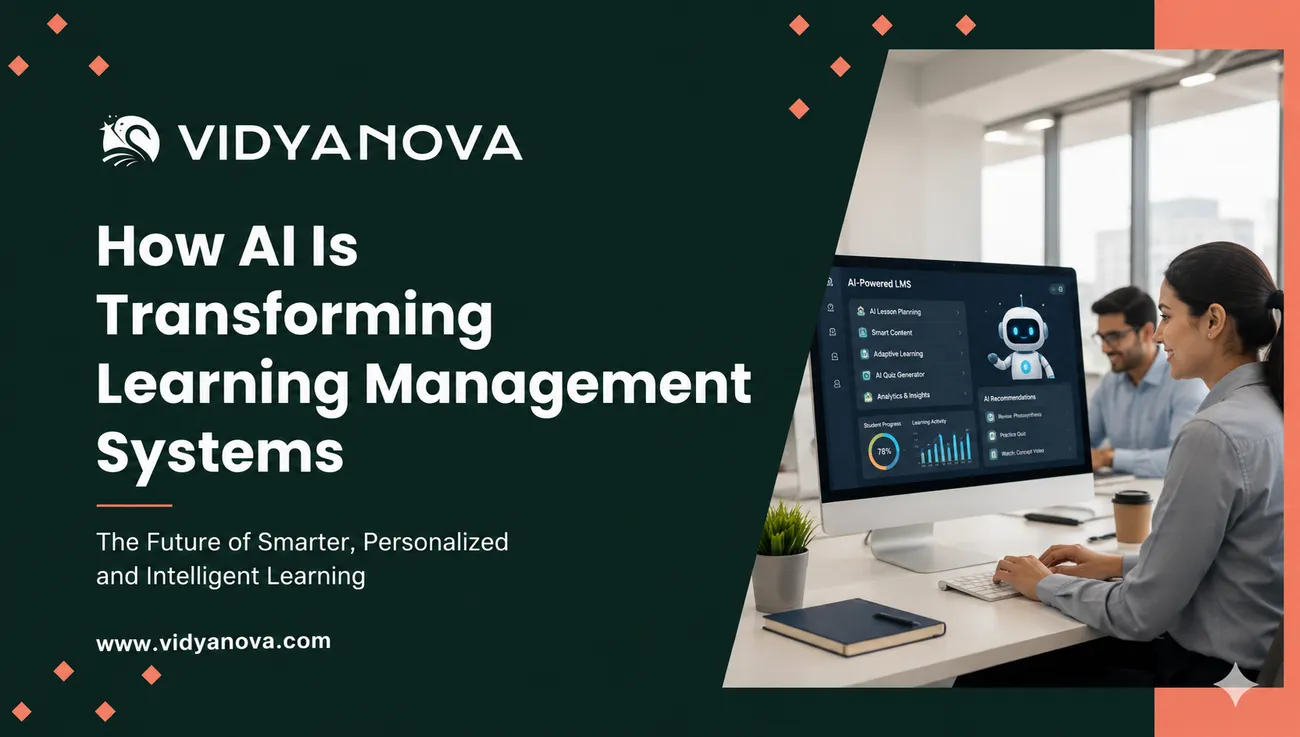
How AI Is Transforming Learning Management Systems
Education is evolving faster than ever, and Artificial Intelligence in Education is leading this transformation. Traditional learning platforms no longer meet the needs of modern educators and learners. Schools, colleges, universities, coaching institutes, and corporate training providers now expect intelligent platforms that simplify teaching while improving learning outcomes. This is where an AI LMS makes a difference.
An AI-powered LMS goes beyond hosting courses. It helps educators create content, personalize learning paths, automate repetitive tasks, analyze learner performance, and deliver engaging educational experiences. As organizations embrace digital transformation, the Learning Management System has become smarter, faster, and more learner-focused.
In this article, we’ll explore how AI is revolutionizing learning management systems and why institutions are increasingly adopting an AI Learning Platform.
What Is an AI LMS?
An AI LMS is a Learning Management System enhanced with artificial intelligence technologies that automate and improve various teaching and learning processes.
Unlike traditional LMS platforms that mainly store learning materials, an AI-powered platform can:
- Generate educational content
- Create quizzes automatically
- Recommend personalized learning paths
- Analyze learner progress
- Suggest improvements
- Assist instructors with lesson planning
- Improve student engagement
Instead of replacing educators, AI works as an intelligent teaching assistant.
Why Artificial Intelligence in Education Matters
Modern classrooms generate enormous amounts of learning data. Teachers often struggle with:
- Creating fresh learning content
- Preparing assessments
- Tracking student performance
- Managing multiple classes
- Personalizing learning
Artificial Intelligence in Education solves these challenges by reducing manual work and helping educators make better instructional decisions. AI enables teachers to spend less time on administrative tasks and more time mentoring students.
"AI is not here to replace teachers; it is here to amplify their impact by shaping more meaningful student interactions."
How AI Is Transforming Learning Management Systems
1. Personalized Learning Experiences
Every learner progresses differently. An AI Learning Platform studies learner behavior, including learning speed, quiz performance, content preferences, weak areas, completion rates, and more. Based on this information, the platform recommends relevant lessons, practice activities, revision content, and additional resources. This creates personalized learning journeys that improve engagement and knowledge retention.
2. AI Lesson Planning
One of the biggest advantages of an AI-powered LMS is AI lesson planning. Instead of spending hours preparing lessons, educators can generate lesson plans, learning objectives, class activities, homework assignments, discussion questions, and course outlines. AI provides structured suggestions that educators can edit and customize according to their teaching style. Benefits include saving preparation time, improving lesson quality, maintaining curriculum consistency, supporting new educators.
3. Automated Content Creation
Modern AI LMS platforms can generate study notes, presentations, reading materials, course summaries, practice questions, and assignments. This allows educators to build complete courses much faster.
4. Intelligent Quiz Generation
Assessments become easier with AI. Rather than writing every question manually, teachers can instantly generate multiple-choice questions, true/false items, fill-in-the-blanks, short-answer questions, and scenario-based assessments. AI systems can also adjust question difficulty based on learner performance. Many systems also adjust question difficulty based on learner performance.
5. Adaptive Learning Paths
Not every learner needs the same content. An AI-powered LMS can automatically skip mastered topics, recommend revision, unlock advanced lessons, and suggest practice exercises to keep learners challenged without overwhelming them.
6. Automated Grading
Manual grading consumes valuable teaching time. AI helps automate evaluation for objective assessments by scoring quizzes, calculating grades, providing instant feedback, and identifying learning gaps. Students receive immediate results, allowing faster improvement.
7. Learning Analytics
Data-driven teaching is becoming essential. An AI LMS provides insights such as student engagement, completion rates, attendance patterns, performance trends, difficult topics, and overall learning progress. These reports help educators make informed instructional decisions.
8. Better Student Engagement
AI enhances interaction by offering learning reminders, personalized recommendations, interactive quizzes, gamified activities, progress tracking, and achievement badges. Students remain motivated throughout their learning journey.
9. Smarter Course Recommendations
An AI Learning Platform can recommend additional learning materials based on previous courses, career goals, skill gaps, interests, and performance history. This creates continuous learning opportunities.
10. Enhanced Accessibility
AI supports inclusive education through features such as text-to-speech, speech-to-text, language translation, automated captions, and reading assistance. These capabilities make learning accessible to a broader range of learners.
Benefits of an AI-Powered LMS
Organizations adopting an AI-powered LMS experience numerous advantages:
- Reduced administrative workload
- Faster course creation
- Improved learner engagement
- Personalized learning experiences
- Better assessment quality
- Data-driven decision-making
- Higher course completion rates
- Enhanced teaching efficiency
- Scalable education delivery
- Improved learner satisfaction
Who Can Benefit from an AI Learning Platform?
AI-powered learning platforms are valuable for a wide range of organizations.
Schools
Create engaging digital classrooms with personalized learning experiences.
Colleges & Universities
Manage large student populations efficiently while improving academic outcomes.
Coaching Centers
Generate assessments, lesson plans, and learning materials quickly.
Corporate Training
Deliver personalized employee training programs at scale.
Online Educators
Build and manage courses with minimal manual effort.
The Future of Learning Management Systems
The future of the Learning Management System is increasingly intelligent. Emerging AI capabilities include predictive learning analytics, AI tutors, conversational learning assistants, real-time feedback, intelligent content recommendations, voice-assisted learning, and automated curriculum development.
As AI technology continues to evolve, learning platforms will become even more personalized, efficient, and engaging.
Conclusion
Artificial Intelligence is redefining how education is delivered. An AI LMS combines automation, personalization, and analytics to create smarter learning experiences for educators and learners alike. From AI lesson planning and automated assessments to personalized learning paths and actionable insights, an AI-powered LMS empowers institutions to deliver high-quality education more efficiently.
As demand for flexible, engaging, and scalable learning grows, adopting an AI Learning Platform is becoming a strategic investment for schools, universities, training providers, and businesses seeking to stay ahead in the digital education landscape.
Frequently Asked Questions (FAQs)
1. What is an AI LMS?
An AI LMS is a Learning Management System that uses artificial intelligence to automate tasks such as lesson planning, content creation, assessments, personalized learning, and learner analytics.
2. How does an AI-powered LMS improve teaching?
It helps educators create lessons faster, generate quizzes, automate grading, analyze student performance, and personalize learning experiences.
3. What is the role of Artificial Intelligence in Education?
Artificial Intelligence in Education enhances learning through automation, adaptive learning, predictive analytics, personalized recommendations, and intelligent teaching support.
4. Can AI replace teachers?
No. AI supports teachers by handling repetitive tasks and providing insights, allowing educators to focus on instruction, mentorship, and student engagement.
5. Who should use an AI Learning Platform?
Schools, colleges, universities, coaching institutes, online educators, and businesses offering employee training can all benefit from an AI Learning Platform.
6. What are the key features of a modern AI LMS?
Common features include AI lesson planning, automated content generation, quiz creation, adaptive learning paths, learning analytics, progress tracking, and personalized recommendations.
7. Is an AI-powered LMS suitable for corporate training?
Yes. It helps organizations deliver scalable, personalized, and data-driven training programs while reducing administrative effort.
Call to Action
Ready to transform the way you teach and learn?
VidyaNova is an advanced AI-powered LMS designed to help educators, institutions, and training organizations create engaging learning experiences with ease. From AI lesson planning and automated content generation to assessments, learner management, and progress tracking, VidyaNova brings the power of Artificial Intelligence in Education into one intuitive Digital Learning Platform.
Book a Free Demo: https://meet.kalnexa.com/agami/vidyanova